Why Your Floors Are Cold in Winter (And It Usually Isn't the Carpet)
Cold feet in the kitchen every December have less to do with your flooring and more to do with what is moving underneath it.
September 22, 2026 · 4 min read
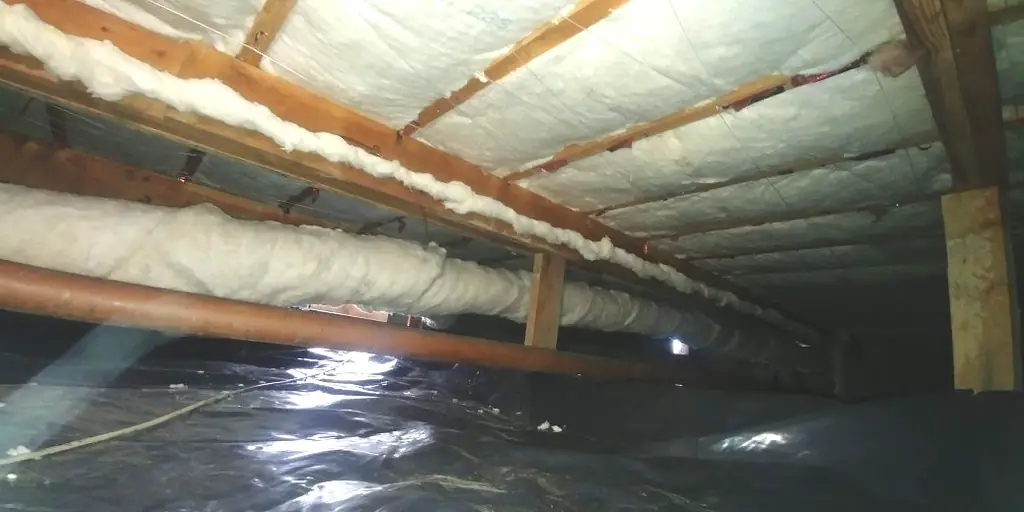
Every fall we get calls from homeowners around Mount Vernon and the Skagit Valley describing the same thing. The floor in the kitchen or the hallway bathroom feels cold, even with the heat running, even with a rug down. People usually blame the flooring itself, or an old window nearby, or figure they need more furnace. Most of the time none of that is the real problem. The real problem is under the house.
Heat moves up, and so does the air chasing it
Warm air rises. That part everyone already knows. What people do not picture is what happens to replace it. As warm air rises up through your living space and out through the attic, it pulls air in from somewhere lower down to take its place. In a lot of older houses, that somewhere lower down is the crawl space, and the path it takes is straight up through the sub floor, through every gap around a pipe, a duct, a bundle of wiring, or a section of floor where the insulation has slipped or been walked on. Stand over one of those penetrations in January and you can feel it. A cold draft coming straight up through the floor, not sideways from a window.
Why carpet and new windows don't fix it
New carpet or an extra rug changes how the floor feels to bare feet for a minute, but it does nothing about the air moving underneath it. New windows are the same. A drafty window is a real problem and worth fixing, but it is a different problem, in a different location, with a different fix. If the cold is coming from the floor itself, especially in a bathroom or kitchen where there is more plumbing and more penetrations through the sub floor, the fix has to happen in the crawl space, not at the ceiling or the glass.
What's actually happening under your house
Take a look under most older Skagit Valley homes and you will usually find one or more of the same things. Insulation that has sagged out of the joist bays or fallen onto the ground. Water lines running bare with no wrap on them. Gaps around plumbing and duct penetrations that were never sealed when the house was built. A vapor barrier that is torn or missing altogether. Every one of those is a path for cold air to move and for heat to escape. Air sealing the penetrations, wrapping the water lines, and getting solid insulation back into the joist bays closes those paths. Our insulation install always includes insulating your water lines as part of the job, not as an upsell, because a wrapped floor that leaves the pipes bare has not actually solved anything.
Ductwork makes it worse if it isn't sealed too
If your ductwork runs through the crawl space, an unsealed and uninsulated duct system is doing the same thing in reverse. It is supposed to carry warm air to your living space, and instead it is leaking that warm air into the crawl space and pulling cold, damp crawl space air back in through gaps in the duct joints. A sealed and insulated duct system keeps the air where it is supposed to be, which is part of why we treat duct sealing as part of a proper crawl space job rather than a separate line item.
How we find out, and what a fix looks like
None of this requires guesswork from a homeowner. It requires someone willing to actually go under the house and look, which is exactly how we start every job. Israel or one of our crew will get into your crawl space, look at the insulation, the vapor barrier, the ductwork, and every penetration through the sub floor, and tell you honestly what is causing the cold rather than guessing from the driveway.
Depending on what we find, the fix might be as simple as air sealing a handful of penetrations and wrapping bare pipe, or it might mean pulling out sagging or damaged insulation, laying new vapor barrier, and reinsulating the whole crawl space properly. No job is too large or too small for us to take on, and we have done both kinds more times than we can count across Skagit, Whatcom, and Island counties.
If your floors have been cold every winter and you have been blaming the carpet, it is worth getting someone under the house to actually look before you spend money on flooring or windows that will not touch the real cause. We offer a free inspection, and an RGS inspector will walk you through exactly what we find and what it would take to fix it, no obligation attached. Give us a call at 425-319-2029 and we will get you on the schedule. If we miss your call, you will hear back the same day.
RGS Crawl Space Insulation, (425) 319-2029
Call (425) 319-2029More articles
What a Crawl Space Clean Out Actually Involves After Rodents Get In
A rodent infested crawl space needs a real clean out before any new insulation goes in, and skipping that step is the most common shortcut we see.
R-38 and R-49 Attic Insulation: What the Number Actually Means
The R-number on your attic insulation describes real resistance to heat flow, and here is how to tell what you are currently working with.