What a Crawl Space Clean Out Actually Involves After Rodents Get In
A rodent infested crawl space needs a real clean out before any new insulation goes in, and skipping that step is the most common shortcut we see.
September 22, 2026 · 4 min read
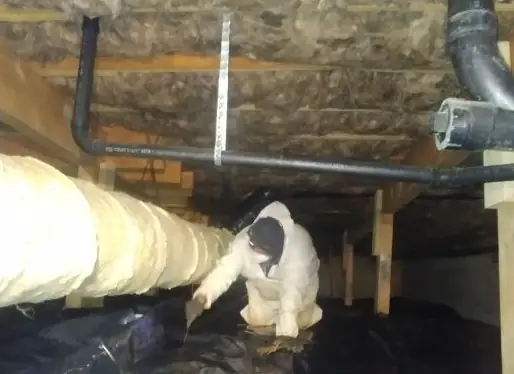
The call usually starts the same way. Someone opens the crawl space access panel to look at a pipe or run a new line, and finds droppings, chewed insulation hanging in shreds, or a smell that was not there before. Rats, mice, and the occasional opossum all find their way into crawl spaces through open vents, gaps around pipes, or a crawl space door that does not seal. Once they are in, they do not just pass through. They nest in the insulation, and that changes what the job in front of us actually is.
Why you can't just insulate over it
You cannot just lay new insulation over a crawl space that has had an infestation in it. Contaminated insulation needs to come out, not get covered up, and the space itself needs to be cleaned and treated before anything new goes in. Skipping that step and reinsulating over the top saves a little time up front and leaves the actual problem sitting under the new material.
Step one: find out how they got in
The first thing we look at is how they got in, not just where they have been. A cat, rat, or any other animal getting into a crawl space almost always means there is an opening somewhere: a torn vent screen, a gap around a pipe, a door that does not close tight. On one job we identified exactly where a cat had been getting into a crawl space and sealed the area off as part of the work, because finding new insulation without closing the entry point just invites the next animal in behind it.
Step two: what actually comes out
Next is removal. Old, damaged, or contaminated insulation comes out, along with any debris left behind. On a full clean out job that can mean pulling batt insulation out of every joist bay, clearing out nesting material, and disposing of everything that came out with it. On one job that included this kind of full clean out, the work covered removal of debris, sealing every entry point we could find, building a new crawl space door, wrapping the water pipes, and replacing the insulation entirely, plus laying new vapor barrier and installing a sump pump and piping for a dryer vent. Not every job needs all of that, but it shows the range of what a real clean out can involve once you are actually in there.
Step three: deodorize and disinfect before anything new goes in
Once the old material and debris are out, the space gets deodorized and disinfected. This is a real step in the process, not an afterthought, and it happens before new insulation goes in, not after. Insulating over a crawl space that still smells like whatever was living in it does not solve the underlying issue, it just buries it.
Why ground cover comes up in the same conversation
Moisture problems and pest problems tend to travel together. An open vent or a gap that lets an animal in is often the same kind of opening that lets damp air in, and a torn or missing vapor barrier on the ground makes a crawl space a more comfortable place for something to nest in the first place. That is part of why a real clean out usually means addressing the ground cover at the same time as the insulation, not as two separate jobs down the road. Where the ground is holding water instead of draining, that gets addressed too, whether that means fixing the drainage or putting in a sump pump.
Only after the space is cleared, cleaned, sealed, and the ground cover is sorted does new insulation go in, and the water lines get wrapped as part of that install every time. It is the same standard whether the crawl space needed a clean out first or not.
A clean out sounds like it should take a long time, and sometimes it does if the damage is extensive, but a straightforward job can move fast. One recent clean out and reinsulation, including a new door, wrapped pipes, sealed penetrations, and new vapor barrier, was finished in a single day.
If you have found evidence of rodents in your crawl space, the first useful step is finding out exactly what you are dealing with before deciding what it will take to fix it. We offer a free inspection: an RGS inspector will get under the house, tell you honestly what is there, and put together written recommendations and a quote, no pressure attached. Call 425-319-2029 and if we miss you, you will hear back the same day.
RGS Crawl Space Insulation, (425) 319-2029
Call (425) 319-2029More articles
Why Your Floors Are Cold in Winter (And It Usually Isn't the Carpet)
Cold feet in the kitchen every December have less to do with your flooring and more to do with what is moving underneath it.
R-38 and R-49 Attic Insulation: What the Number Actually Means
The R-number on your attic insulation describes real resistance to heat flow, and here is how to tell what you are currently working with.