Vapor Barrier and the Wet Ground of the Skagit Valley
Ground cover and insulation solve the same problem from two sides, and doing one without the other just buys you a year.
September 22, 2026 · 3 min read
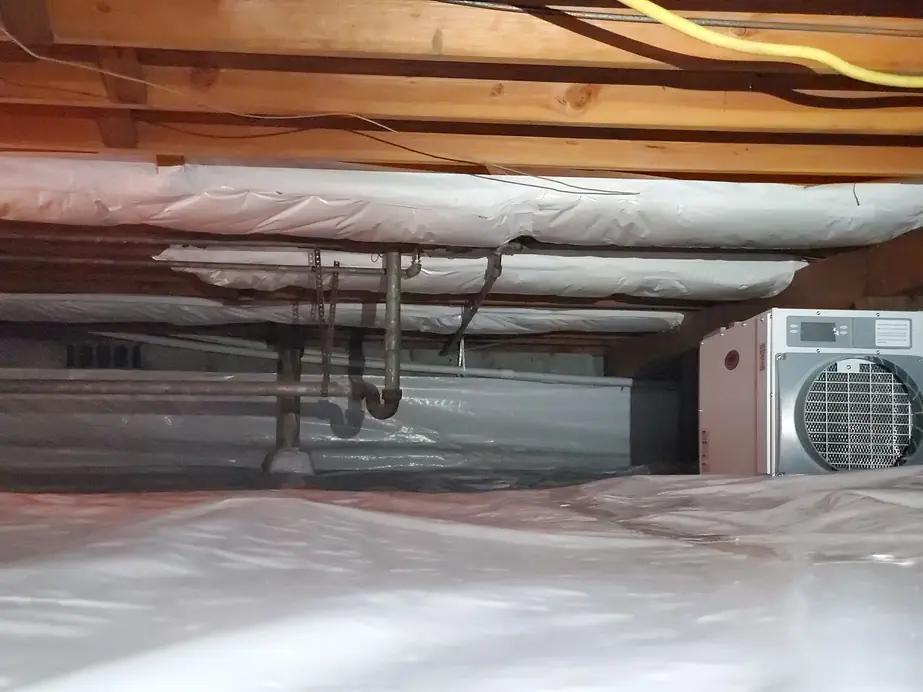
Skagit Valley ground is wet. Anyone who has lived here through a winter already knows that without needing to be told, and it is the single biggest thing that shapes how a crawl space under a local house actually behaves compared to a crawl space somewhere dry. Bare or poorly covered ground under a house does not stay inert. Moisture in the soil evaporates upward into the crawl space air, especially through the wet months, and that moisture has to go somewhere. Usually it ends up in the insulation, the framing, and eventually working its way into the house above.
What ground cover actually does
Vapor barrier, also called ground cover, is the layer that stops that upward moisture migration before it becomes anyone's problem. It is heavy plastic sheeting laid across the entire ground surface of the crawl space, sealed at the seams and around piers and posts, so that the wet soil underneath is no longer in direct contact with the air your insulation and framing are sitting in. Done properly it covers the whole floor, not just the middle where it is easy to reach.
Insulation and ground cover are one job, not two
Here is the part homeowners do not always expect: insulation and ground cover are one job, not two. Batt insulation in the joist bays above a crawl space with torn, missing, or inadequate ground cover is going to fail, and it usually fails the same way every time. Moisture rising from the ground gets into the batt, the batt gets heavy and loses its loft, and eventually it sags and falls out of the joist bay entirely, sometimes ending up sitting directly on wet ground itself. At that point it is not insulating anything and it is also holding moisture against the floor framing above it. Installing new insulation without first dealing with the ground cover underneath it is spending money on a fix that is already set up to fail.
That is why we treat vapor barrier and insulation as a single job whenever both are needed, rather than doing one now and coming back for the other later. Removing torn or failing ground cover, laying new vapor barrier across the full floor, and then installing new insulation into properly prepared joist bays gives the insulation an actual chance to stay dry and keep performing.
Drainage and sump pumps when ground cover isn't enough
Ground cover on its own is not always enough if the crawl space has a standing water problem rather than just soil moisture. Some sites need drainage work to actually move water out of the crawl space instead of letting it pool, and some need a sump pump installed to handle water that collects faster than passive drainage can keep up with. Both of those are things we install as part of a crawl space job when the site calls for it, because a vapor barrier laid over standing water is only buying a little time.
Signs your crawl space needs attention
A few signs tend to show up together when a crawl space needs attention on this front. Ground cover that is visibly torn, shifted, or missing in sections. Standing water or consistently damp soil under the house, especially after rain. Insulation that feels damp, has visible mold, or has sagged out of the joists. A musty smell that shows up in the house itself, particularly in rooms directly above the crawl space, even when nothing looks obviously wrong from inside. Any one of those on its own is worth a look. A few of them together usually means the ground cover and the insulation both need attention at the same time.
What an inspection actually covers
None of this is a guessing game from a homeowner's side. It is exactly what a proper inspection is for. An RGS inspector will get into the crawl space, look at the ground cover, the insulation, the framing, and any drainage or standing water issues, and give you a written recommendation and quote before any work starts, free of charge. If the fix needs to include drainage or a sump pump alongside the vapor barrier and insulation, that gets covered in the same written estimate rather than turning into a surprise partway through the job.
If your crawl space has not had new ground cover in a long time, or you are not sure what is currently down there, give us a call at 425-319-2029. If we miss you, you will hear back the same day, and we serve Skagit, Whatcom, and Island counties along with the surrounding areas.
RGS Crawl Space Insulation, (425) 319-2029
Call (425) 319-2029More articles
Why Your Floors Are Cold in Winter (And It Usually Isn't the Carpet)
Cold feet in the kitchen every December have less to do with your flooring and more to do with what is moving underneath it.
What a Crawl Space Clean Out Actually Involves After Rodents Get In
A rodent infested crawl space needs a real clean out before any new insulation goes in, and skipping that step is the most common shortcut we see.